Professionals Don’t Use That – The Content Creator Paradox
Recently, I saw some influencers and YouTubers complaining about the expectations some users had regarding the lack of features on the release of the Sony A7 V. In the process, they belittled their audience -the consumers of these products- with condescending comments. Examples include Jared Polin from Fro Knows Photo, Gerald A. Dinkel from Gerald Undone, Peter Lindgren, Curtis Padley, Kasey Stern from Camera Conspiracies, and others. Most of them concluded that “open gate is probably the most overrated feature of recent years” and that anyone complaining is a “clueless commenter who is clueless, and clueless influencers who should know better” or that “it shows their pure ignorance”.
Some other YouTubers and influencers reacted to these opinions calmly, trying not to bash these creators and aiming for a civil dialogue—despite the condescending attitude toward their own audience. This post, however, is anything but polite. I don’t care about politeness; I care about facts. So, first of all, who gives these influencers the authority to tell anyone what they should or shouldn’t do? Who are these influencers? Are they formal, renowned filmmakers or DPs known for any blockbusters? As far as I know, Gerald started as a handyman creating silly videos and helping his partner with their sports photography business. The only influencer who appears on IMDb is Jared Polin, listed as a set photographer – not as a DP or cinematographer. Who are these people to tell their audience what they should or shouldn’t care about in their cameras?
Reliable Sources
Now, I appeal to reason. I think that to be some kind of authority on this matter, you must have either experimented extensively with the equipment to teach how things work or at least have a good, well-known portfolio. Simply creating YouTube videos shouldn’t be confused with being a filmmaker – even if Casey Neistat claims to be one. Making a Hollywood movie is something else entirely.
Most enthusiasts and content creators who follow these influencers aspire to produce content that looks like Hollywood. That’s something most influencers need to understand and consider. That’s why the term “cinematic” is overused in nearly every video, and why most enthusiasts want to mimic what’s done in Hollywood. With that in mind, let’s recall what real filmmakers do with open gate.
The Blockbuster Filmmakers
Steven Spielberg and George Lucas (among other great directors) used open gate with spherical lenses to ensure their film delivery could fit both cinemascope movie theaters and TV without the typical pan-and-scan issues. Even by the time Halloween (1978) was made, John Carpenter expressed the sentiment of using Panavision anamorphic lenses to give the low-budget film a more “expensive and professional look.”
By Carpenter’s logic, filming the movie with a proper, high-budget film camera would trick the audience into thinking this was a high-budget production. He believed audiences would put enough trust in a film that looked professionally made to overlook the low-budget sets, costumes and talent.
Making Halloween (1978): The Film That Changed Horror
Riding the Hype
For some years, Sony led the hype in the hybrid camera market, bringing the latest features to their users. At the beginning, their cameras overheated, but the features made users tolerate that inconvenience – the sharpness and low-light performance trumped any other drawback. At the same time, Canon and Nikon were far behind in the mirrorless race. Panasonic and other brands brought cool new features but in Micro Four Thirds format, and most users, influencers, and YouTubers bashed those other brands for lagging behind Sony or having a tiny sensor. Then, the brands started to catch up to Sony: Canon released their mirrorless lineup and eventually showed an 8K RAW-capable camera; Nikon acquired RED and released a camera capable of recording in RED RAW. In the open gate department, things evolved quite fast:
| Fujifilm X-H2S | Jul 2022 |
| Panasonic Lumix S5 II | Jan 2023 |
| Fujifilm X-S20 | May 2023 |
| Panasonic Lumix S5 IIX | May 2023 |
| Blackmagic Cinema 6K | Sep 2023 |
| Panasonic Lumix GH7 | Jun 2024 |
| Panasonic Lumix S9 | May 2024 |
| Fujifilm X-M5 | Nov 2024 |
| Leica SL3-S | Jan 2025 |
| Panasonic Lumix S1R II | Feb 2025 |
| Fujifilm GFX Eterna 55 | Mar 2025 |
| Panasonic Lumix S1 II | May 2025 |
| Panasonic Lumix S1 IIE | May 2025 |
| Canon EOS C50 | Sep 2025 |
| Fujifilm X-T30 III | Nov 2025 |
| Canon EOS R6 III | Nov 2025 |
Even the iPhone 17 Pro and Pro Max, released on September 9, 2025, brought open gate to their users, and DJI with their Osmo Action 6, released in November 2025, also brought open gate. It’s a trend, and as such, any Sony enthusiast would expect Sony to bring open gate to the table. That’s something these influencers do NOT understand – or want to understand.
Now, I find it quite odd that the discussion about whether open gate is overrated came NOT when Fuji or Panasonic delivered their first open gate cameras three years ago, nor even on the release of the Canon EOS R6 III. The feature was diminished when Sony didn’t include it in their latest release. It looks like someone is mad about being left behind, and they should, I really liked Mehran Hadad take on the issue.
Professional Filmmakers Don’t Use That… Really?
I also find it quite odd that people without any blockbusters in their portfolio or a long career in filmmaking can say with a straight face what aspiring filmmakers need or don’t need – while in practice, most content creators need more features from their gear than any Hollywood production. It’s a paradox. Let me cite some examples:
- Autofocus: Formal film crews have people dedicated to the art of focusing the subject – focus pullers whose sole job is to measure every inch of the set and check all blocking beforehand to ensure focus works during filming. Content creators, on the other hand, have to record themselves and rely on the camera’s autofocus.
- RAW Video and LOG: Formal film crews don’t need LOG or RAW; they can record in ProRes HQ or even 8-bit H264 without issue because they have full control of set lighting, which determines exposure, white balance temperature, etc. Content creators, on the other hand, have to rely on RAW footage and LOG. Most lack the level of control over scenes or light temperature and need flexibility with exposure and white balance in post-production.
- IBIS, 6K, 8K, and Cropping: Formal film crews can produce in 4K UHD and deliver in 4K UHD; they have full control of camera movement with dollies, gimbals, Steadicams, sliders, jib cranes, etc. Content creators, on the other hand, rely on stabilized lenses, IBIS, Gyroflow, or other means of image stabilization in post-production – thus requiring higher resolution to compensate for the crop inherent in stabilization for 4K delivery.
- 32-Bit Float Audio: Formal film crews produce content in sound stages; they already have a place with limited noise where they can record using 16-bit audio with high-quality (and quite expensive) microphones and sound equipment, plus a crew dedicated to that task. Content creators, on the other hand, have to deal with ambient noise, echoey rooms, etc., thus needing to record in the highest quality possible to clean the audio in post-production.
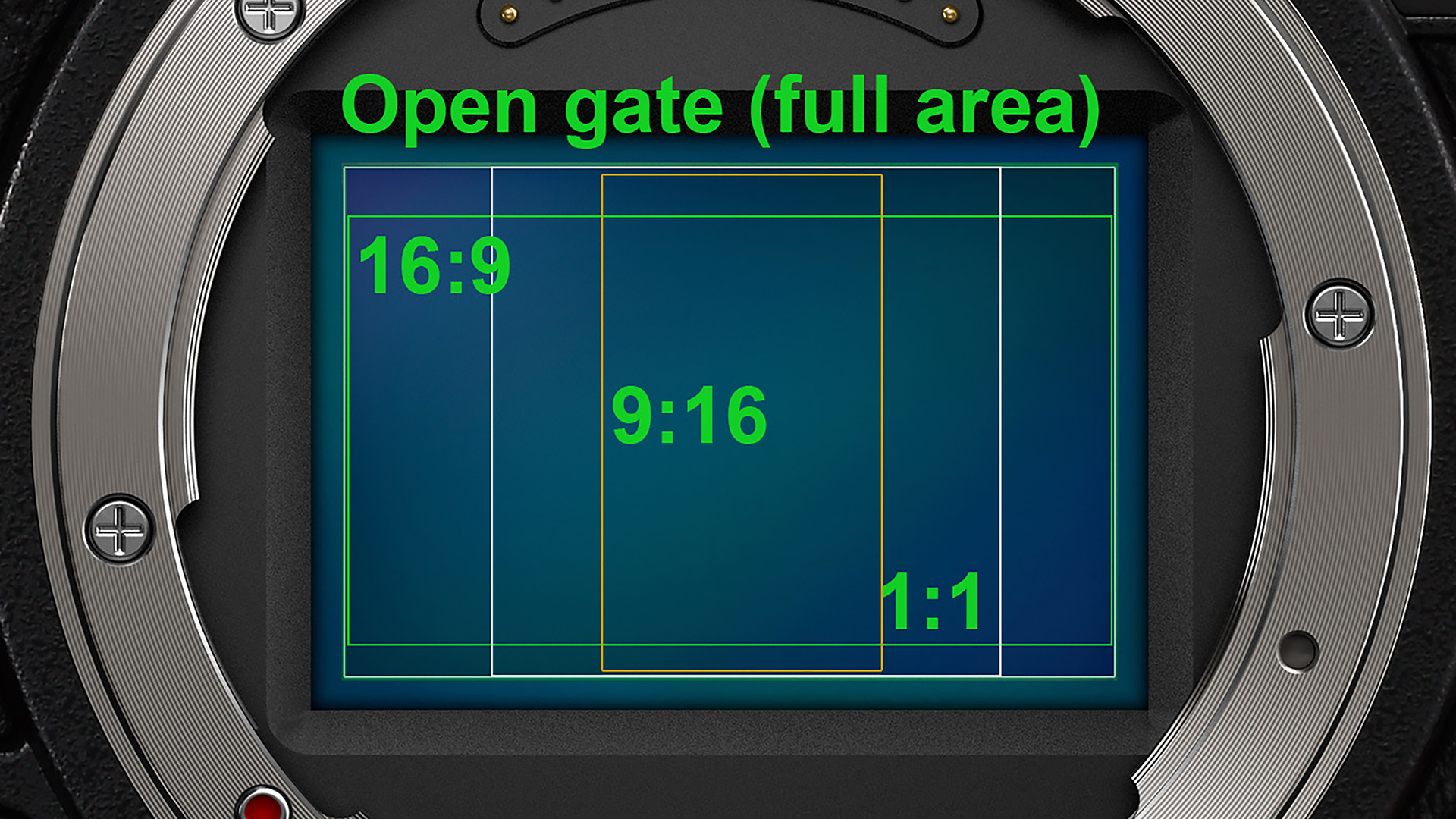
- Open Gate: While some high-end productions use open gate with anamorphic lenses and to deliver in both cinemascope and 4:3, it isn’t the end of the world if they record in 16:9 using spherical lenses – in fact, some blockbusters use two or three cameras in the same rig for different formats. On the other hand, enthusiasts and content creators without a huge crew can take advantage of open gate with just one camera – to frame for vertical and horizontal video and to experiment with anamorphic lenses.
My unsolicited advice to these influencers: With your indispensable know-how, show your audience what the gear is capable of. Don’t tell them what they should or shouldn’t do. Don’t belittle, diminish or patronize your audience – they are smarter than you think. And to their subscribers, don’t be afraid to experiment with different brands and gear, don’t let anyone tell you what you need or don’t need or who you can or can’t bash, exercise your freedom and vote with your wallet.
P.D.: I’m still waiting for Gerald A. Dinkel from Gerald Undone to update/correct his Atomos Ninja misinformed guide.